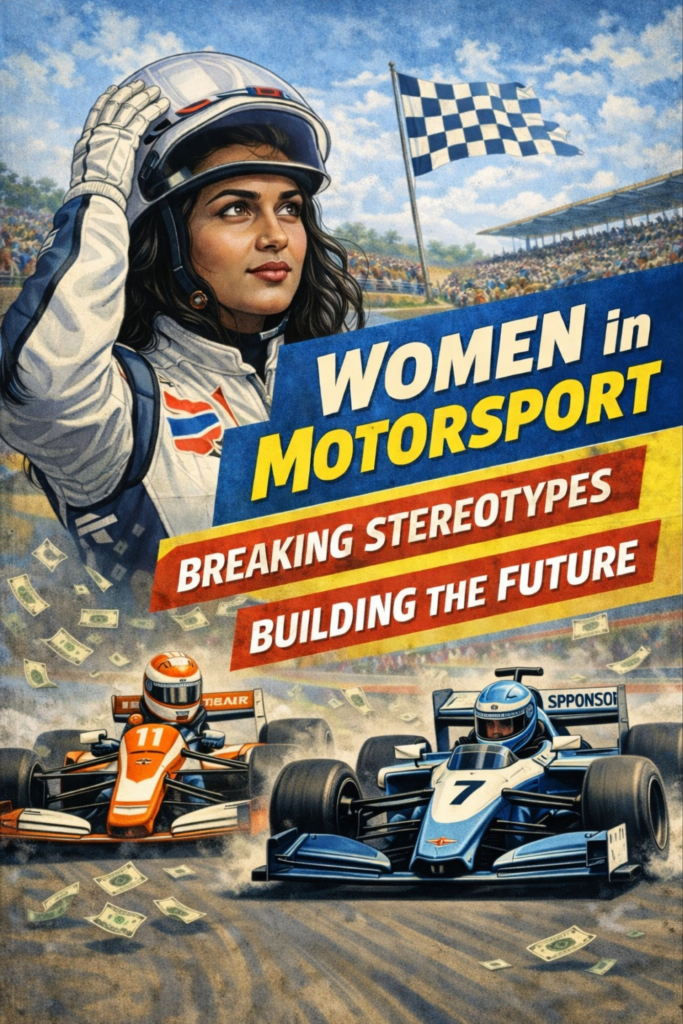
Women in Motorsport: What Still Needs to Change
Breaking Stereotypes, Opening Doors, and Building the Future
By Manisha Kelkar – Manisha Unleashed
Every time I step into a race car, I carry more than just my helmet and gloves.
I carry a question that women in motorsport have been asked for decades:
“Can women really compete in racing?”
It’s a question that surprises me every time I hear it.
Not because it’s offensive — but because it shows how little people truly understand about motorsport.
A race car does not care whether the driver is a man or a woman.
The stopwatch doesn’t care either.
All it measures is speed, precision, and consistency.
But despite that simple truth, women in motorsport still face challenges that go far beyond the race track.
Let’s talk about them honestly.
The Stereotype That Still Exists
The most common stereotype women drivers hear is this:
“Motorsport is a man’s sport.”
It’s something many girls grow up hearing before they even sit in a kart.
But if you think about it logically, motorsport isn’t about brute strength. It’s about:
- precision
- concentration
- reaction time
- mental endurance
Those qualities are not defined by gender.
In fact, some studies suggest women have equal or faster reaction times and stronger focus under pressure.
Yet the stereotype continues.
Sometimes it’s subtle.
Sometimes it’s very obvious.
But every woman who races has experienced it.
The Unique Barriers in Indian Motorsport
Motorsport itself is already one of the most difficult sports to enter anywhere in the world.
But in India, the challenges can be even greater — especially for women.
The biggest barriers include:
- Lack of Early Exposure
In many countries, young drivers begin karting at age 6 or 7.
In India, motorsport is still not widely understood or accessible, so many young talents start much later.
- Financial Challenges
Racing is expensive.
Karting, equipment, travel, and training require serious investment. Without sponsorship or strong financial support, many talented drivers simply cannot continue.
For women drivers, finding sponsors can be even harder because companies sometimes hesitate to invest in something they see as “unproven.”
- Cultural Expectations
In some parts of society, women are still expected to follow traditional career paths.
Motorsport can seem risky, unconventional, and unfamiliar.
But change happens when someone is willing to challenge expectations.
The Women Who Are Changing the Game
The truth is that the motorsport world is already changing.
More women are entering racing every year.
More fans are supporting them.
And more young girls are discovering that the dream of becoming a racing driver is not impossible.
Every woman who gets into a race car becomes part of that progress.
Not just for herself — but for the next generation watching.
What the Next Generation Can Do
If you’re a young girl who dreams about racing, here’s something I want you to remember:
You don’t need permission to chase your dream.
Motorsport rewards one thing above all else:
performance.
If you are fast, disciplined, and determined, the track will show it.
Start small.
Go karting.
Train your body and mind.
Study the sport.
And most importantly — believe that you belong there.
Because you do.
What the Motorsport World Must Do
At the same time, the industry itself must continue to evolve.
That means:
- creating more grassroots opportunities for girls
- supporting young female drivers with training and funding
- highlighting women’s achievements in racing
The more visibility women drivers have, the faster the stereotypes disappear.
The Future I Want to See
The day I’m waiting for is very simple.
A day when a female driver wins a race and nobody says:
“She won… for a woman.”
Instead, they simply say:
“She won because she was the fastest.”
That’s the future motorsport deserves.
And it’s a future that’s getting closer every year.
Until next week…
Stay fearless. Stay focused. Stay unleashed.
— Manisha