
Manisha Unleashed
Are Young Racing Drivers Starting Too Young?
Is putting children into competitive karting at five or six creating champions — or unnecessary pressure?
There is a sentence you hear constantly in motorsport:
“You have to start young.”
And increasingly, “young” seems to mean very young.
Five-year-olds are racing karts. Six-year-olds have coaches. Eight-year-olds travel internationally. By ten, some children already have years of competition behind them, sophisticated data analysis and families spending serious amounts of money on their racing careers.
The logic seems obvious.
If Formula One drivers often started karting when they were children, then the earlier you begin, the better your chances.
But I think we need to question that assumption.
Are we actually developing better racing drivers by starting children so young — or are we sometimes turning childhood into a professional sporting career before a child is old enough to decide whether they even want one?
There is an enormous difference between letting a six-year-old discover motorsport and telling a six-year-old that they are beginning their journey to Formula One.
And I think that distinction matters.
Starting Young Has Obvious Advantages
Let’s acknowledge why families do it.
Driving is a skill.
Like playing the piano, skiing, tennis or gymnastics, repetition builds coordination and familiarity.
A child who begins karting at six could have thousands of laps behind them by the time they reach their teenage years.
They learn braking.
Throttle control.
Racing lines.
Overtaking.
Defending.
Wet-weather driving.
Understanding grip.
Perhaps most importantly, they develop an instinctive relationship with a vehicle.
Things that an older beginner has to consciously think about can become automatic.
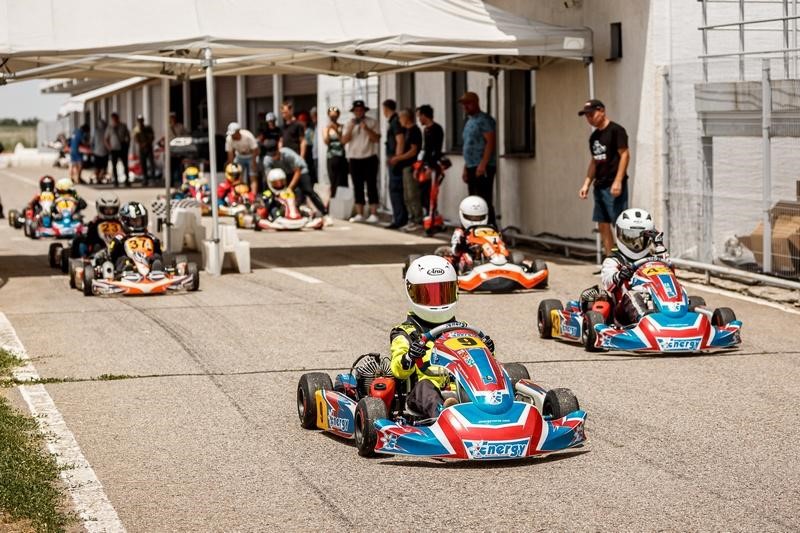
That foundation can be incredibly valuable.
When you watch an exceptional young karter, their car control can be astonishing.
But there is a problem.
Starting young and becoming serious young are not necessarily the same thing.
Learning at Six Is Different From Building a Career at Six
I have no problem with a six-year-old driving a kart.
In fact, I think it can be fantastic.
Driving teaches concentration, coordination, responsibility and confidence.
The issue begins when something that should primarily be enjoyable becomes a professional development programme.
Suddenly there are coaches.
Data engineers.
Fitness programmes.
Testing schedules.
Championship expectations.
Social media accounts documenting “The Road to F1”.
And sometimes very disappointed adults standing beside the kart when the result isn’t good enough.
At six or seven years old, should finishing fifth really feel like failure?
I don’t think so.
A child should be able to climb out of the kart after finishing last and still say:
“That was brilliant. Can I go again?”
That enthusiasm might ultimately be more valuable than another trophy.
Are We Confusing Early Success With Future Potential?
Junior sport has always had this problem.
Children develop at different rates.
One eight-year-old might be physically stronger, more confident or emotionally more mature than another.
That can produce enormous performance differences.
But those differences don’t necessarily tell us who will become the better driver at 18 or 25.
Motorsport can make this even more complicated because equipment matters.
The child winning every weekend may be extremely talented.
They may also have the best kart, engine, team, coaching and testing programme.
Usually it is some combination of all of them.
So when adults begin identifying future superstars at eight years old, I become uncomfortable.
We simply don’t know.
The Pressure Can Become Enormous
Motorsport is unusual because parents are often deeply involved.
They aren’t simply sitting beside a football pitch.
They may be spending tens of thousands of pounds — eventually hundreds of thousands — supporting a child’s career.
That creates pressure even when nobody intends it.
Imagine being ten years old and understanding that your parents have made enormous financial sacrifices for your racing.
Then you crash.
Or qualify badly.
Or simply aren’t fast that weekend.
An adult racing driver already finds those situations difficult.
Imagine processing them as a child.
The journey home shouldn’t feel like a Formula One team’s post-race debrief.
Sometimes the correct analysis should simply be:
“You didn’t have a great race. Never mind. What do you want for dinner?”
Parents Can Accidentally Want It More Than Their Children
This is perhaps the most difficult subject.
Every motorsport paddock has passionate parents.
Most are trying to help.
They see talent in their child and want to provide opportunities they perhaps never had themselves.
There is nothing wrong with that.
But motorsport can become addictive for parents too.
The competition.
The trophies.
The status.
The dream of Formula One.
And gradually the question can change from:
“Does my child love racing?”
to:
“How do we get my child into Formula One?”
Those are very different questions.
A seven-year-old shouldn’t carry their family’s dream on their shoulders.
If the child genuinely loves racing, fantastic.
Give them opportunities.
But periodically ask a very simple question:
“Do you still want to do this?”
And make sure “no” is an acceptable answer.
What About Burnout?
If someone begins competitive karting at five, they could have been racing for thirteen years by the time they’re eighteen.
Think about that.
Testing.
Travelling.
Training.
School.
Racing.
Sponsor commitments.
Championship pressure.
Year after year.
By the age when many young adults are discovering what they actually enjoy, a racing driver might already feel that their entire identity has been decided.
That’s dangerous.
Motorsport needs motivated drivers.
Not drivers continuing because they’ve invested too much of their childhood to stop.
The objective shouldn’t be to produce the world’s fastest 12-year-old.
It should be to develop someone who still desperately wants to race when they’re 20.
Does Starting Earlier Actually Guarantee Success?
No.
This is where motorsport sometimes confuses correlation with causation.
Many successful racing drivers started very young.
But almost every modern professional driver started young because that is how the current development system operates.
That doesn’t necessarily prove that five is substantially better than seven, nine or even later.
It proves that the system increasingly rewards early participation.
Once children are competing nationally and internationally at very young ages, anyone joining later begins with a significant experience disadvantage.
That creates an arms race.
One family starts at eight.
Another thinks:
“We need to start at seven.”
Someone else starts at six.
Eventually five begins to seem normal.
But where does that logic end?
Three?
The Financial Consequences Matter Too
Starting earlier doesn’t only increase pressure.
It increases cost.
A family that begins serious karting at six rather than ten could potentially add four additional years of racing expenses before reaching cars.
And competitive karting can become extremely expensive.
Travel.
Engines.
Tyres.
Entry fees.
Mechanics.
Coaching.
Testing.
Hotels.
Transport.
Suddenly a sport that should be discovering talent is filtering children according to how long their families can afford to remain in the system.
That worries me.
If motorsport wants the best drivers, it should be trying to widen the talent pool.
Not creating a development system where families believe they must begin spending serious money before their child has finished primary school.
What Should Young Drivers Actually Learn?
This is where I think junior motorsport could change its priorities.
At six, seven or eight, I wouldn’t be obsessed with championships.
I’d want a young driver to develop:
Car control.
Let them slide the kart.
Racecraft.
Let them battle.
Mechanical understanding.
Teach them why the kart behaves differently when something changes.
Adaptability.
Different circuits. Different conditions. Wet weather.
Sportsmanship.
Teach them how to win properly — and lose properly.
Independence.
Let them begin understanding what the kart is telling them rather than waiting for an adult to provide every answer.
And above everything:
Make sure they’re having fun.
Because enjoyment creates curiosity.
Curiosity creates learning.
And learning eventually creates speed.
Losing Might Be More Valuable Than Winning
Parents understandably want their children to succeed.
But losing is one of motorsport’s greatest teachers.
You discover that being fast isn’t enough.
You make mistakes.
You learn resilience.
You learn that another driver was simply better that day.
You learn to analyse what happened and improve.
Protecting young drivers from failure doesn’t prepare them for professional motorsport.
Formula One, endurance racing, IndyCar — every serious category is filled with disappointment.
Even brilliant drivers lose far more races than they win.
A child who learns to handle that constructively is developing a skill that may ultimately matter far more than another junior trophy.
Should Children Have Professional Coaches?
Yes — but the coach’s objective matters.
A good junior coach shouldn’t simply make the child faster.
They should teach the child how to learn.
Instead of saying:
“Brake here. Turn here. Accelerate here.”
Ask:
“What did the kart do in that corner?”
“Why do you think you lost time?”
“What happens if we change your entry?”
The first method can produce a faster lap today.
The second might produce a better racing driver ten years from now.
That distinction is enormous.
Motorsport Should Develop People, Not Just Drivers
There is another issue that doesn’t receive enough attention.
Most children in karting will not become professional racing drivers.
That isn’t pessimism.
It’s mathematics.
There are incredibly few professional seats compared with the number of young drivers chasing them.
So junior motorsport should leave children with something valuable even if the racing career eventually ends.
Confidence.
Engineering knowledge.
Teamwork.
Discipline.
Fitness.
Friendships.
Problem-solving.
The ability to cope with success and failure.
If a 15-year-old leaves motorsport having gained those things, the experience wasn’t wasted.
Even if they never drive another racing car.
So, What Is the Right Age?
I don’t think there is one.
A child can begin enjoying karting extremely young.
But I would separate the journey into stages.
Ages 5–8: Discover
Drive.
Have fun.
Learn basic control.
Try different activities.
Don’t talk constantly about Formula One.
Ages 9–12: Develop
Introduce more structured coaching.
Build racecraft.
Learn basic data and mechanical principles.
Race competitively — but keep perspective.
Ages 13–15: Evaluate
Now performance begins to tell us more.
Is the driver genuinely competitive?
Do they have the motivation?
Do they understand the commitment required?
Most importantly:
Do they want this career, or do the adults around them want it?
16+: Commit
If the talent, results, motivation and funding are there, then serious professional development becomes understandable.
At that point the young driver is also increasingly capable of taking ownership of their career.
And ownership matters.
What I Would Tell a Young Driver
If you are seven years old and love karting, don’t worry about Formula One.
Enjoy driving.
If you’re ten and another driver is faster than you, learn from them.
If you’re twelve and you lose a championship, the world hasn’t ended.
If you’re fourteen and you’re genuinely talented, start thinking seriously about what comes next.
And if you’re sixteen and still absolutely desperate to become a professional racing driver?
Then work harder than you ever imagined.
Because now the difficult part really begins.
Are Young Racing Drivers Starting Too Young?
To drive? No.
To learn? No.
To compete? Not necessarily.
But to carry the pressure of becoming a professional racing driver?
Sometimes, absolutely.
Starting young can build extraordinary skills.
But starting young isn’t the same as needing to professionalise childhood.
The best junior development programme shouldn’t simply ask:
“How quickly can we make this child fast?”
It should ask:
“How do we help this child become the best driver they can be at 18, 20 and 25?”
Those objectives can produce very different decisions.
And perhaps the most important thing adults in junior motorsport can remember is this:
You can replace an engine.
You can replace a kart.
You can enter another championship.
You cannot give somebody their childhood back.
Unleashed Truth
Starting children in motorsport young can create brilliant drivers. Treating children like professional racing drivers too young can destroy the very enthusiasm that might have made them brilliant.
The objective shouldn’t be to produce a champion at ten.
It should be to develop someone who still wants to become a champion at twenty.
— Manisha Kelkar
Manisha Unleashed
The Road to Le Mans