
Manisha Unleashed
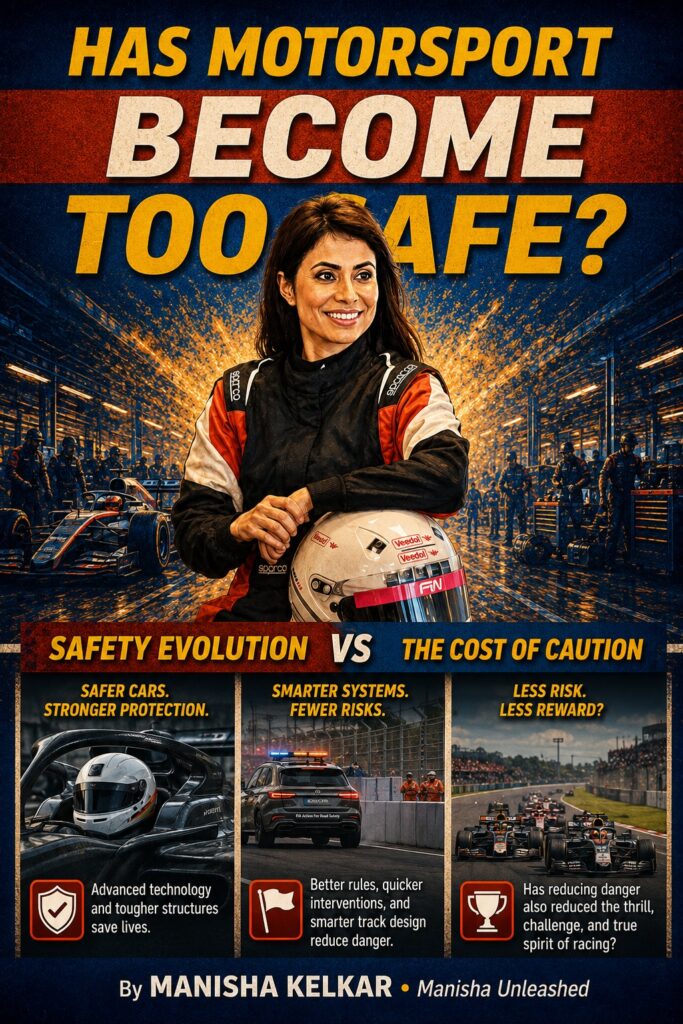
Has Motorsport Become Too Safe?
Can racing retain its spectacle and challenge while continuing to improve safety?
There is a sentence you occasionally hear from motorsport fans:
“Racing was better when it was dangerous.”
Usually, someone will then talk about legendary drivers from the past, enormous speeds, frightening circuits, cars with very little protection and an era when drivers seemed almost superhuman.
I understand the fascination.
There is something extraordinary about watching old footage and seeing drivers racing powerful cars around circuits where the consequences of a mistake could be enormous.
But whenever somebody says motorsport has become “too safe,” I think we need to ask a much more uncomfortable question:
What exactly do we want to make more dangerous?
Do we want drivers to have less protection?
Do we want weaker barriers?
Less effective helmets?
More dangerous circuits?
Cars that are more likely to catch fire?
Surely not.
But there is also another side to this debate.
Motorsport is supposed to be challenging.
Drivers should have to manage risk.
Circuits shouldn’t become enormous expanses of asphalt where every mistake can simply be corrected.
So perhaps the real question isn’t:
“Has motorsport become too safe?”
Perhaps it is:
“Can motorsport become safer without removing the consequences that make racing difficult?”
That’s this week’s Unleashed Truth.
Motorsport Used to Be Incredibly Dangerous
We sometimes romanticise the past.
The cars looked spectacular.
The circuits were extraordinary.
Drivers raced with comparatively little protection.
And many of the personalities from those eras became legends.
But there was another reality.
Drivers died.
Far too many of them.
Motorsport history is filled with talented people whose careers—and lives—ended because the technology available to protect them simply wasn’t good enough.
Cars caught fire.
Cockpits offered limited protection.
Barriers could make accidents worse.
Medical response was far less sophisticated.
Circuits sometimes had trees, buildings, earth banks and other obstacles frighteningly close to the racing surface.
That isn’t something we should want back.
Courage is an important quality in a racing driver.
But surviving shouldn’t depend on luck.
Safety Has Changed Motorsport
Look at the safety systems surrounding a modern racing driver.
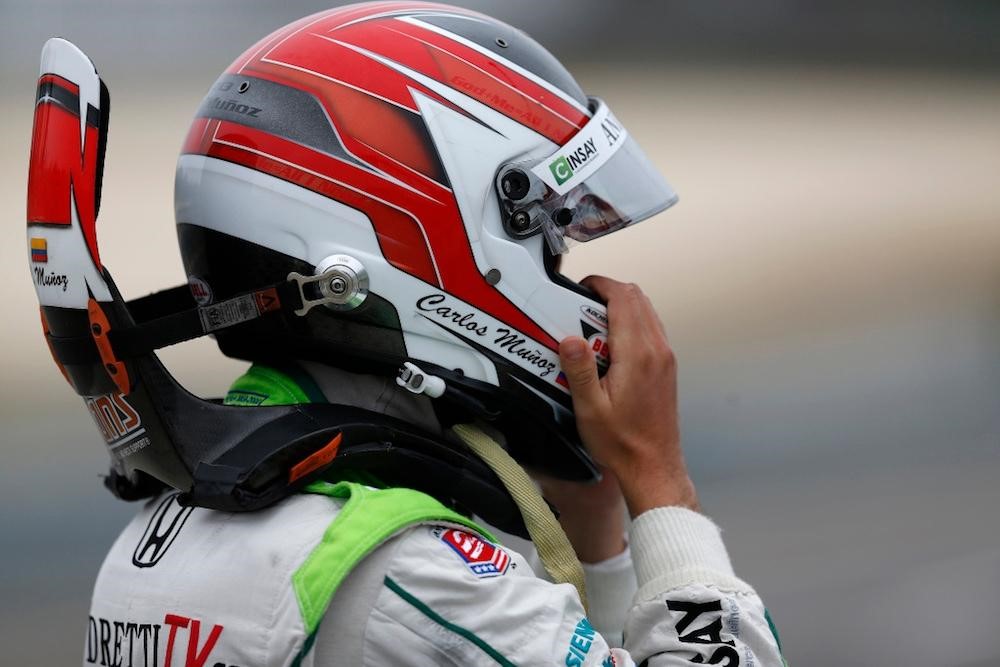
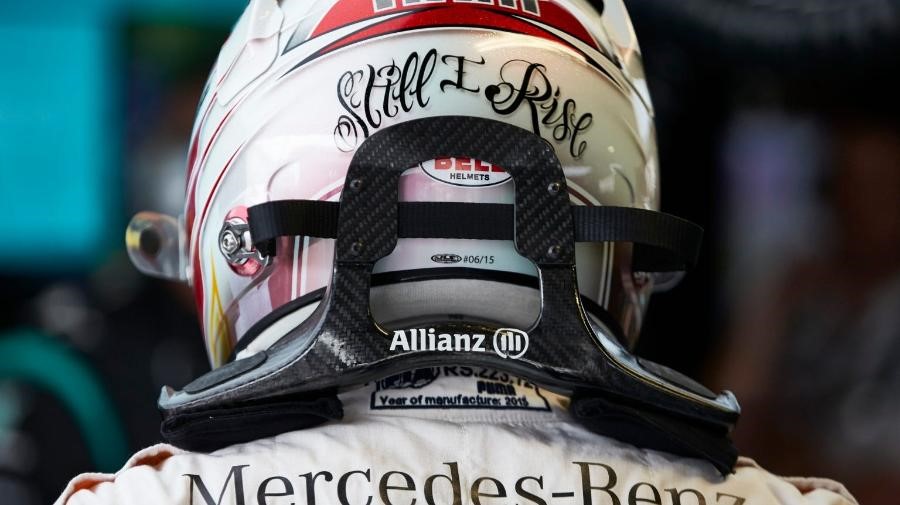
Helmets.
Fire-resistant clothing.
Harnesses.
Survival cells.
Head-and-neck protection.
Energy-absorbing structures.
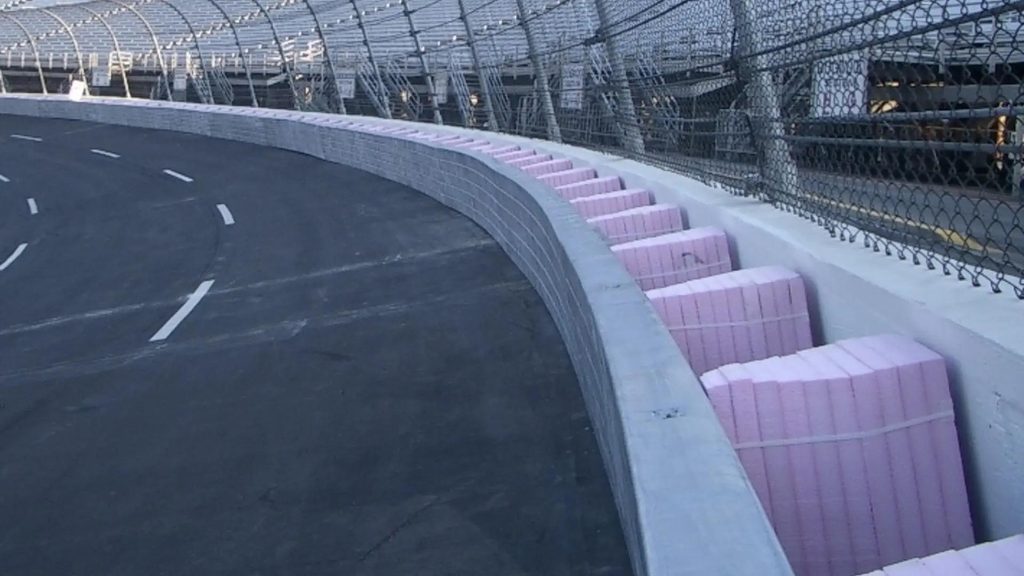
Improved barriers.
Wheel tethers.
Fire suppression.
Medical teams.
Circuit design.
Impact data.
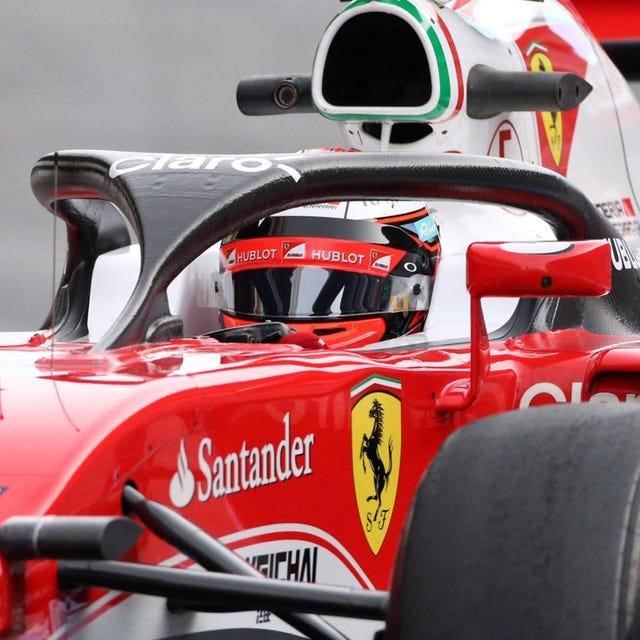
And in Formula One, the Halo.
Each development exists because motorsport learned something—sometimes through terrible circumstances.
Nobody watching a spectacular accident wants to see a driver seriously injured.
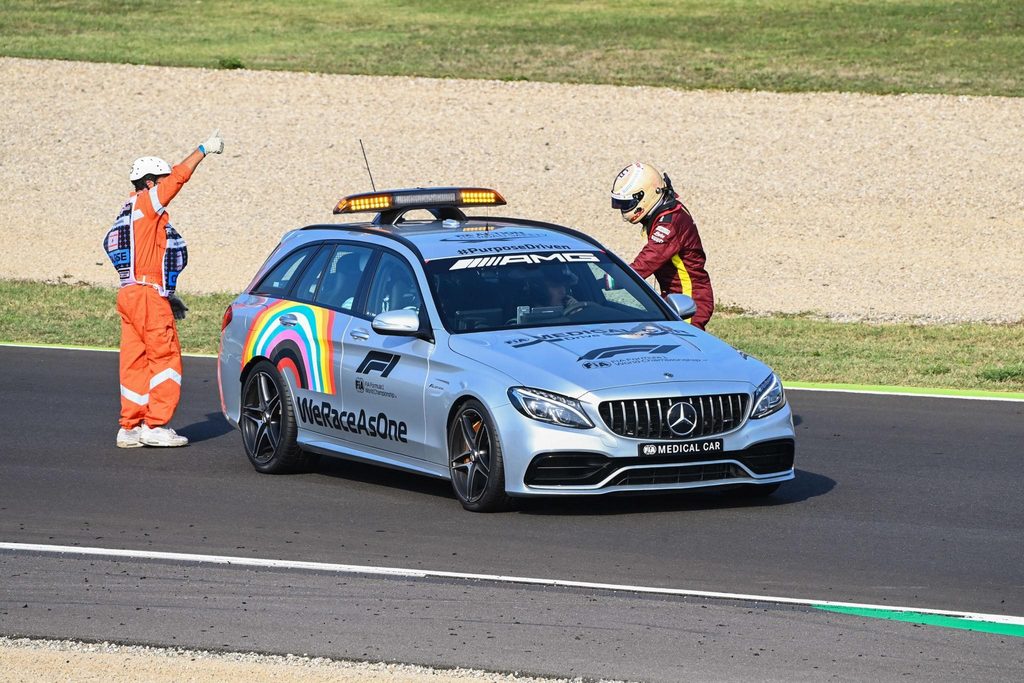
When a driver climbs out of a destroyed racing car, we should celebrate the engineering that made that possible.
Not complain that the accident wasn’t dangerous enough.
Remember the Halo Debate?
The Halo is a perfect example of how attitudes towards safety can change.
When it was introduced, plenty of people hated it.
It looked strange.
It interrupted the traditional appearance of an open-cockpit racing car.
Some people argued that Formula One was becoming too cautious.
Then came accidents where cockpit protection demonstrated exactly why it existed.
Suddenly aesthetics seemed considerably less important.
That tells us something.
Safety equipment often looks unnecessary until the moment you need it.
And when that moment arrives, you want every piece of protection engineers can possibly provide.
But I Think Fans Are Sometimes Talking About Something Else
When people say motorsport has become too safe, I don’t think most of them genuinely want drivers to be injured.
I think they’re reacting to something different.
They feel that mistakes sometimes don’t have enough sporting consequences.
And on that point, I think there is a legitimate debate.
A driver misses a corner.
They run across a huge asphalt area.
Rejoin.
Continue racing.
Perhaps they lose almost nothing.
Years ago, that same mistake might have meant gravel.
Grass.
A spin.
Or retirement.
Obviously we don’t want a mistake to result in serious injury.
But should a mistake result in lost time?
I think it should.
Safe Doesn’t Have to Mean Easy
This is where circuit design becomes incredibly important.
A racetrack can protect a driver from serious injury while still punishing poor driving.
Those objectives aren’t contradictory.
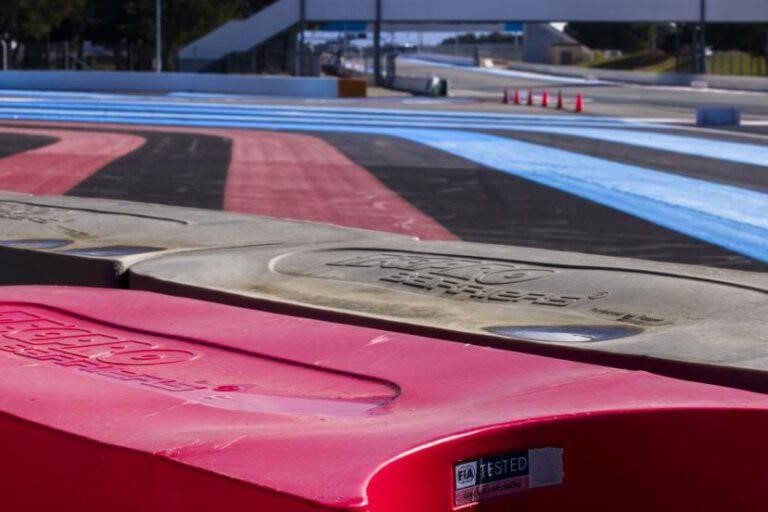
Gravel traps are one example.
Get the corner wrong and you may lose substantial time—or become stuck.
But the gravel can also help slow a car before it reaches a barrier.
Different solutions work at different circuits, and safety engineering is far more complicated than simply choosing between asphalt and gravel.
But the principle matters:
The consequence of a mistake should ideally be sporting rather than physical.
Run wide?
Lose time.
Miss the braking point?
Lose positions.
Push beyond the limit?
Perhaps your race ends.
But wherever possible, the driver should climb out unharmed.
That’s the balance I want.
Drivers Still Need Fear
This might sound strange after everything I’ve just said.
But I think a racing driver needs some awareness of fear.
Not terror.
Not the belief that a small mistake could kill them.
But respect.
Respect for speed.
Respect for the car.
Respect for the circuit.
Respect for consequences.
Fear can sharpen judgement.
If you believe you can make any mistake without consequence, something changes psychologically.
A difficult corner should make you think.
You should know that getting it wrong matters.
That’s part of what makes mastering a circuit satisfying.
But there’s an enormous difference between:
“If I get this wrong, I’ll lose the race.”
and:
“If I get this wrong, I might not go home.”
I know which version of motorsport I want.
Does Danger Create Better Drivers?
This is another argument you sometimes hear.
Drivers from previous generations are described as braver because they competed knowing how dangerous the sport was.
Perhaps they were.
It required extraordinary courage.
But does greater danger necessarily create better racing drivers?
I don’t think so.
Driving ability is about much more than bravery.
Car control.
Precision.
Racecraft.
Technical understanding.
Tyre management.
Consistency.
Adaptability.
Decision-making.
Mental strength.
You don’t improve those qualities by making barriers more dangerous.
In fact, excessive danger can potentially prevent drivers from exploring the true performance limit.
The Fastest Driver Isn’t Necessarily the Bravest
This distinction is important.
A racing driver needs courage.
But courage without judgement isn’t necessarily a strength.
Imagine two drivers approaching a dangerous corner.
One attacks regardless of the consequences.
The other understands exactly how much risk is justified.
Who is the better driver?
I’d choose the second.
Professional motorsport isn’t about proving you’re fearless.
It’s about managing risk intelligently while extracting maximum performance.
Sometimes that means attacking.
Sometimes it means backing off.
Knowing the difference is part of racecraft.
Endurance Racing Makes Risk Management Even More Important
This is something I think about because of my own ambition to race at Le Mans.
You cannot approach a 24-hour race as though every corner is the final lap of a sprint.
There is traffic.
Changing weather.
Night driving.
Fatigue.
Different classes of cars.
Changing grip.
Mechanical considerations.
You constantly calculate risk.
Do I overtake here?
Do I wait?
How much time will I lose?
What’s happening behind me?
Is the track wet beyond this corner?
That doesn’t make endurance racing less exciting.
For me, it makes it more sophisticated.
The challenge isn’t simply driving fast.
It’s knowing when you need to be fast.
Have Modern Circuits Become Too Forgiving?
Sometimes, yes.
This is where I sympathise with traditionalists.
Some modern circuits have enormous paved run-off areas.
They’re often necessary for safety, particularly when a venue hosts motorcycles as well as cars.
But visually and competitively, they can sometimes make circuits feel less intimidating.
A white line then becomes the main thing separating the racetrack from the run-off area.
And suddenly we need endless debates about track limits.
Was all of the tyre beyond the line?
Was the driver forced off?
Should the lap be deleted?
Should there be a five-second penalty?
Fans become frustrated.
Drivers become frustrated.
Officials become frustrated.
Perhaps the circuit itself should provide more of the answer.
Where possible, I like the idea that exceeding the track limits produces a natural loss of performance.
Not injury.
Not an unnecessarily dangerous accident.
Just:
You made a mistake. You lose time.
Simple.
Spectacle Doesn’t Require Serious Accidents
This is another misconception I think motorsport should reject.
What makes racing exciting?
Overtaking.
Close competition.
Drivers operating at the limit.
Different strategies.
Changing weather.
Great circuits.
Unpredictable results.
Mechanical battles.
Human rivalries.
Watching an extraordinary driver do something you didn’t think was possible.
None of those require someone getting hurt.
A spectacular race doesn’t need a spectacular crash.
Some of the greatest moments in motorsport history involve two brilliant drivers racing centimetres apart.
That’s spectacle.
Safety Can Actually Make Racing Better
There is another side people rarely consider.
When drivers trust the safety systems around them, they may be willing to race harder.
Modern cars allow drivers to survive impacts that would once have had devastating consequences.
That doesn’t mean drivers stop respecting danger.
But it gives them confidence in the machinery.
And that can produce incredibly close racing.
So safety and spectacle aren’t necessarily enemies.
Sometimes safety enables spectacle.
Motorsport Should Never Stop Improving Safety
This is where my position is very clear.
If engineers discover a way to reduce the chance of serious injury without fundamentally destroying the competition, motorsport should use it.
Even if it looks unusual.
Even if traditionalists complain.
Even if it changes something we’ve become accustomed to.
Motorsport has always been driven by engineering progress.
It would be strange to celebrate innovation that makes cars faster while rejecting innovation that keeps drivers alive.
There should never be a point where we say:
“That’s safe enough.”
Because there will always be another lesson to learn.
But Safety Shouldn’t Remove Responsibility
This is the other half of my argument.
Making drivers safer shouldn’t mean removing every consequence of exceeding the limit.
We should distinguish between:
Physical consequences
Serious injury or death.
We should reduce these relentlessly.
And:
Sporting consequences
Lost time, lost positions, damaged tyres, a trip through gravel or even retirement.
These can remain part of racing.
In fact, they probably need to.
Because without consequences, finding the limit becomes less meaningful.
What Would I Change?
My philosophy would be simple.
Protect the driver. Punish the mistake.
Build the strongest survival cells possible.
Improve helmets.
Improve barriers.
Improve fire protection.
Improve medical response.
Continue studying every serious accident.
Use technology to reduce injuries.
But design circuits, where practical, so that leaving the racing surface costs something competitively.
Not someone’s health.
Their lap time.
That, to me, is the ideal compromise.
The Uncomfortable Truth
Here’s my Unleashed Truth:
Motorsport hasn’t become too safe. Some parts of motorsport may have become too forgiving.
Those aren’t the same thing.
I don’t want racing to become more dangerous.
I want it to remain difficult.
I want drivers to know that mistakes matter.
I want circuits that demand precision and commitment.
I want cars that challenge the people driving them.
But when something goes badly wrong, I want the driver protected by every piece of technology, research and engineering knowledge available.
Because nobody should need to die to prove motorsport is exciting.
Would the Heroes of the Past Have Wanted Today’s Safety?
I sometimes wonder what drivers from motorsport’s most dangerous periods would think about modern safety.
Would they complain that today’s drivers have it too easy?
Perhaps some would.
But I suspect many would have happily used modern helmets, survival cells, barriers and medical facilities if they’d been available.
Being courageous doesn’t mean wanting to be injured.
The great drivers of the past raced with the technology their era gave them.
Today’s drivers do exactly the same.
And the next generation should have even better protection.
That’s progress.
Has Motorsport Become Too Safe?
My answer is:
No.
I don’t believe a racing driver can ever be too well protected.
But motorsport can become too sanitised if we remove every sporting consequence from making a mistake.
That’s the distinction.
Make the cars safer.
Make the barriers safer.
Make the helmets safer.
Make medical response better.
Keep researching accidents.
Keep innovating.
But don’t make the racing easy.
Because racing should still demand courage.
It should still demand precision.
It should still reward drivers who can operate close to the limit without crossing it.
The challenge should be beating the circuit and your competitors — not surviving them.
Now It’s Your Turn
So here’s this week’s Unleashed Truth question:
Has motorsport become too safe — or simply safer?
Would you like to see circuits become less forgiving while maintaining modern driver protection?
Should mistakes automatically have greater sporting consequences?
Or is the pursuit of maximum safety more important than preserving the intimidating character of traditional racing?
And here’s the question that gets right to the heart of it:
Can a racetrack be both extremely safe and genuinely frightening to drive?
I think it can.
And perhaps designing circuits that achieve both is one of motorsport’s greatest engineering challenges.
Protect the driver. Punish the mistake. Preserve the racing.
That’s the balance I’d like to see.
— Manisha Kelkar
Manisha Unleashed | Motorsport Mania
UNLEASHED TRUTH
Asking the questions motorsport doesn’t always want to answer.