

Could a Woman Really Win the Formula One World Championship?
Forget publicity and marketing — look at the actual sporting, physical and development challenges
Whenever women in Formula One are discussed, the conversation seems to move very quickly towards publicity.
Would a female Formula One driver attract sponsors?
Would television audiences increase?
Would it be good for Formula One’s image?
Those are interesting commercial questions, but they avoid the question that matters to me as a racing driver:
Could a woman actually become Formula One World Champion?
Not simply reach Formula One.
Not be given a test drive.
Not become a reserve driver.
Could she beat the best drivers in the world over an entire season and win the championship?
My answer is yes.
But saying “yes” is the easy part.
Understanding what would actually have to happen is much more interesting.
Because the biggest barriers may have surprisingly little to do with whether a woman is physically capable of driving a Formula One car.
First: What Does an F1 Champion Actually Need?
Strip away the glamour surrounding Formula One and the requirements are brutally simple.
A champion needs extraordinary speed, consistency, racecraft, technical understanding, mental resilience and the ability to perform under enormous pressure.
They also need something that is sometimes forgotten:
the right car at the right moment.
Formula One isn’t athletics.
Drivers don’t compete using identical equipment.
You could theoretically be one of the greatest drivers in the world and never become World Champion because you never find yourself in championship-winning machinery.
So before discussing whether a woman could win Formula One, we need to separate two questions.
Could a woman possess the necessary driving ability?
And:
Could a woman successfully navigate the motorsport system far enough to reach a championship-winning Formula One car?
I think the second question is much harder.
The Physical Question
This is normally where the debate begins.
Formula One cars are physically demanding.
Drivers experience enormous lateral and longitudinal forces. Their neck muscles must withstand repeated high-G cornering. Braking requires considerable force. Cockpit temperatures can become extreme, and a Grand Prix can last close to two hours.
There is no point pretending these demands don’t exist.
On average, men have greater absolute muscle mass and upper-body strength than women.
But that doesn’t automatically answer the question.
A Formula One driver doesn’t need to be able to bench-press more than another driver.
They need enough strength and endurance to operate the car at maximum performance without physical deterioration affecting their driving.
Those are different things.
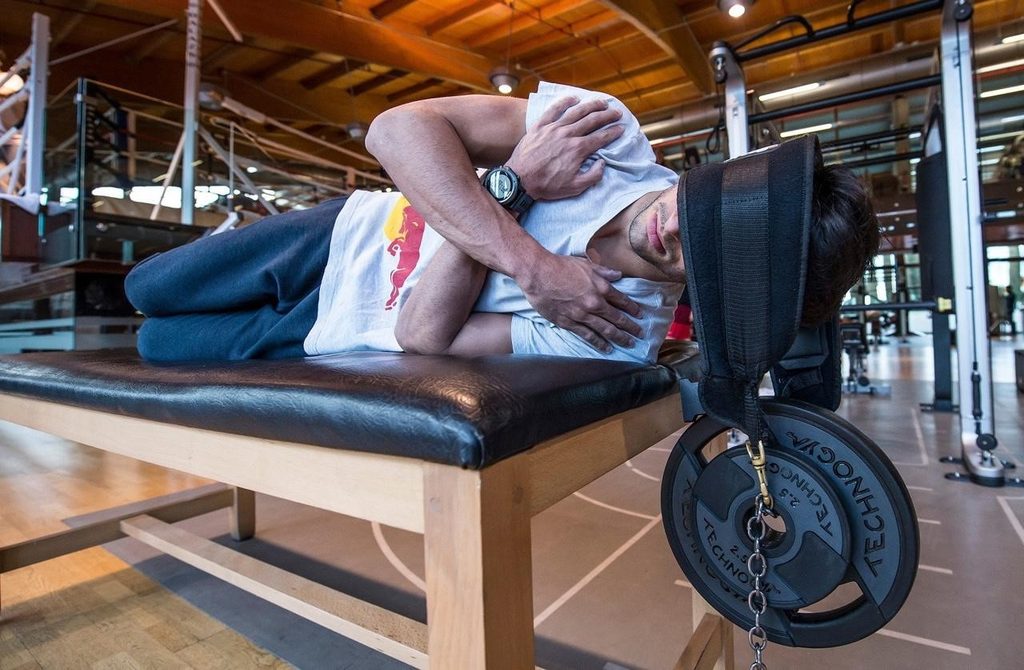
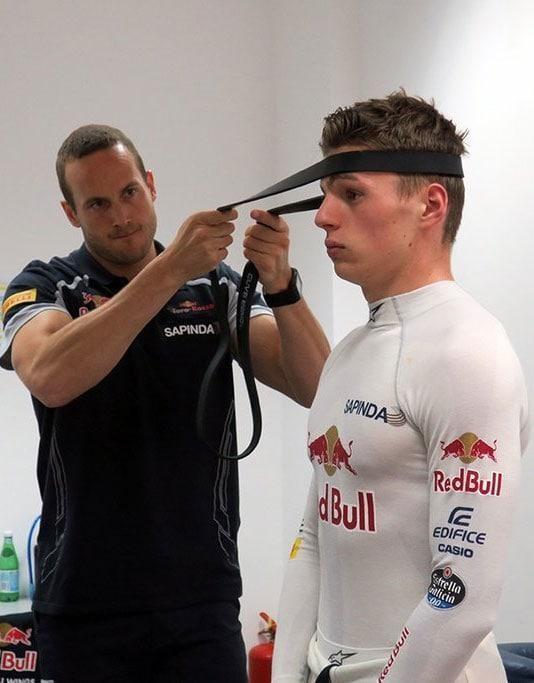
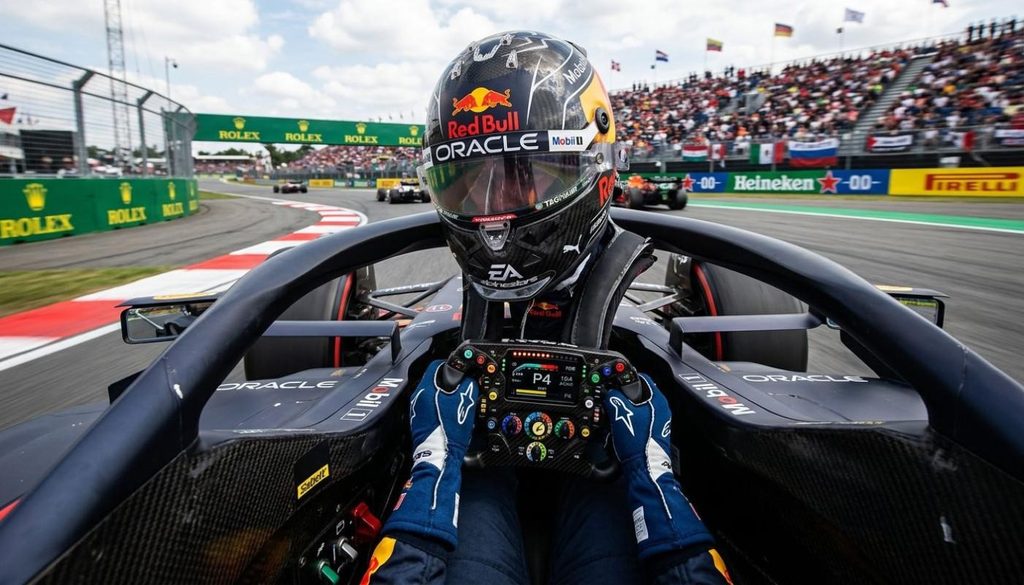
6
Motorsport fitness is also highly specialised.
Neck strength can be trained.
Cardiovascular endurance can be trained.
Core strength can be trained.
Heat tolerance can be improved.
Reaction and coordination can be developed.
A female driver might require a different training programme from a male driver, particularly in building and maintaining the required strength while staying within an appropriate racing weight.
But different does not mean impossible.
The relevant question isn’t whether the average woman could physically drive an F1 car.
The average man couldn’t either.
The question is whether an elite female athlete, trained specifically for Formula One from a young age, could meet its physical requirements.
I see no convincing reason why she couldn’t.
The Bigger Problem Starts Much Earlier
This is where I think the discussion becomes much more important.
You cannot suddenly decide at 20 that you would like to become a Formula One driver.
For most modern F1 drivers, the journey began in childhood.
Karting.
National competition.
International karting.
Formula 4.
Formula Regional.
Formula 3.
Formula 2.
Then, for a tiny number, Formula One.
Every stage eliminates drivers.
Some aren’t fast enough.
Some don’t develop quickly enough.
Some run out of money.
Some don’t receive the right opportunities.
And this is where the numbers become important.
If vastly more boys than girls enter karting, then vastly more boys will eventually reach the professional single-seater categories.
Imagine starting with 10,000 boys and 100 girls.
Even if talent were distributed identically, you would expect many more exceptional male drivers simply because the initial population is so much larger.
That isn’t evidence that girls cannot become elite drivers.
It’s a pipeline problem.
We Need More Girls Racing — Not Just More Women in F1
If motorsport genuinely wants to discover a female Formula One World Champion, putting a woman into an F1 test occasionally isn’t enough.
The process needs to begin perhaps 15 years earlier.
Thousands of girls need opportunities to try karting.
Hundreds need to race competitively.
The strongest need access to professional coaching.
Then they need serious competition against the strongest boys.
The exceptional ones need financial support to progress internationally.
And importantly, they need enough time to develop.
Because this is ultimately a numbers game.
You cannot manufacture an elite racing driver through marketing.
You have to find one.
And the larger the talent pool, the better your chances.
Don’t Protect Female Drivers From Competition
This might be controversial, but I think it matters.
Female-only racing programmes can be extremely valuable.
They can create visibility, provide opportunities and attract young women into motorsport.
That’s important.
But eventually, any woman who genuinely wants Formula One must race against the drivers she will ultimately need to beat.
The stopwatch doesn’t care about gender.
Neither does the championship table.
At some stage, promising female drivers need to compete in the strongest available fields and be evaluated by exactly the same standards.
That isn’t unfair.
It’s essential.
Because if a woman eventually reaches Formula One, I don’t want people saying:
“She’s there because Formula One wanted a woman.”
I want them saying:
“She’s there because she was too fast to ignore.”
The Financial Problem
There is another enormous obstacle.
Money.
Reaching Formula One can require millions of pounds of investment through a driver’s junior career.
That affects male and female drivers alike.
But there is an additional challenge for girls.
If a sponsor is choosing between two 13-year-old karters and one belongs to a development pathway that has historically produced almost every Formula One driver, perceived risk can influence investment.
That can become self-reinforcing.
Fewer girls receive serious backing.
Fewer reach high-level single-seaters.
Therefore fewer produce headline results.
Sponsors then conclude that backing female drivers is riskier.
Breaking that cycle requires investors who understand that driver development takes years.
Not one season.
Not one publicity campaign.
Years.
What About Driving Style?
This is another fascinating question.
Would a woman need to drive differently?
Possibly.
But Formula One drivers already have different driving styles.
Some prefer a very sharp front end.
Others want greater rear stability.
Some are incredibly aggressive on corner entry.
Others build speed through precision and smoothness.
Engineering exists partly to allow drivers to extract performance using their individual strengths.
There isn’t one biologically prescribed “Formula One driving style”.
Ultimately the car measures inputs.
Throttle.
Brake pressure.
Steering.
Tyre loading.
Lap time.
It doesn’t know whether the person making those inputs is male or female.
Mental Pressure Could Be the Hardest Challenge
Imagine being the first genuinely competitive female Formula One driver of the modern era.
Every mistake would become a debate.
Crash?
“Are women strong enough for Formula One?”
Bad qualifying session?
“Was she promoted too early?”
Finish ahead of your teammate?
Suddenly you’re presented as proof of an entire gender’s ability.
That is an absurd burden.
Male drivers are generally allowed to represent themselves.
The first woman capable of fighting near the front of modern Formula One would inevitably be treated as though she represented billions of women.
That psychological pressure could be enormous.
She would need exceptional mental resilience simply to concentrate on the job.
Then Comes the Hardest Part: Winning
Suppose she makes it.
She’s physically prepared.
She’s proven herself through karting.
Won in Formula 3.
Won races in Formula 2.
Earned an F1 seat.
Now everything becomes much simpler.
And much harder.
She has to beat everyone.
Not because she’s a woman.
Because that’s what Formula One demands.
She would need to beat teammates who have been developed since childhood.
She would need to qualify within hundredths of a second of the fastest drivers on Earth.
She would need to manage tyres, starts, strategy, changing weather, pressure and 20-plus race weekends.
She would need to avoid unnecessary mistakes.
And finally, she would need a championship-capable car.
At that point, gender becomes almost irrelevant.
Performance becomes everything.
What Would It Actually Take?
If I were building a programme designed to produce the first female Formula One World Champion, I wouldn’t begin by searching for an 18-year-old woman to put into Formula 3.
I’d begin with children.
Get thousands of girls into karts at six, seven and eight years old.
Identify natural speed rather than publicity potential.
Give the best proper coaching.
Put them against the fastest boys.
Measure everything.
Support the ones who continue winning.
Move them through international karting and into cars based on results.
Give them excellent engineers.
Develop their fitness specifically for their physiology.
Teach them vehicle dynamics.
Teach them how to communicate with engineers.
Teach them how to understand tyres.
Teach them how to lose.
Teach them how to recover.
And never promote them simply because having a female driver would generate headlines.
Because the objective shouldn’t be to put a woman into Formula One.
The objective should be to create a racing driver capable of winning Formula One.
Those are very different ambitions.
We’ve Been Asking the Wrong Question
People often ask:
“Are women capable of Formula One?”
I think that’s the wrong question.
A better question is:
“Has motorsport created a large enough female talent pool, with enough competition, funding and development, to give us a realistic chance of discovering an exceptional female F1 driver?”
I don’t think it has.
Not yet.
And that’s why I’m optimistic.
Because that is a solvable problem.
Could a Woman Really Become Formula One World Champion?
Yes.
But she won’t win because she’s a woman.
And she shouldn’t receive the trophy because her story is inspirational.
She will need to be extraordinarily talented.
She will need years of development.
She will need financial backing.
She will need physical preparation.
She will need exceptional mental strength.
She will need to survive one of the most competitive development systems in world sport.
And eventually she will need the right Formula One car underneath her.
Then she’ll have to do exactly what every male World Champion has had to do.
Beat everybody else.
That is the standard.
And I wouldn’t want it any other way.
Unleashed Truth
The greatest barrier to a female Formula One World Champion may not be what happens inside an F1 cockpit. It may be everything that has to happen during the 15 years before she ever reaches one.
The question isn’t whether a woman can be fast enough.
The question is whether motorsport will create a deep enough pipeline to discover the one who is.
— Manisha Kelkar
Manisha Unleashed
The Road to Le Mans