
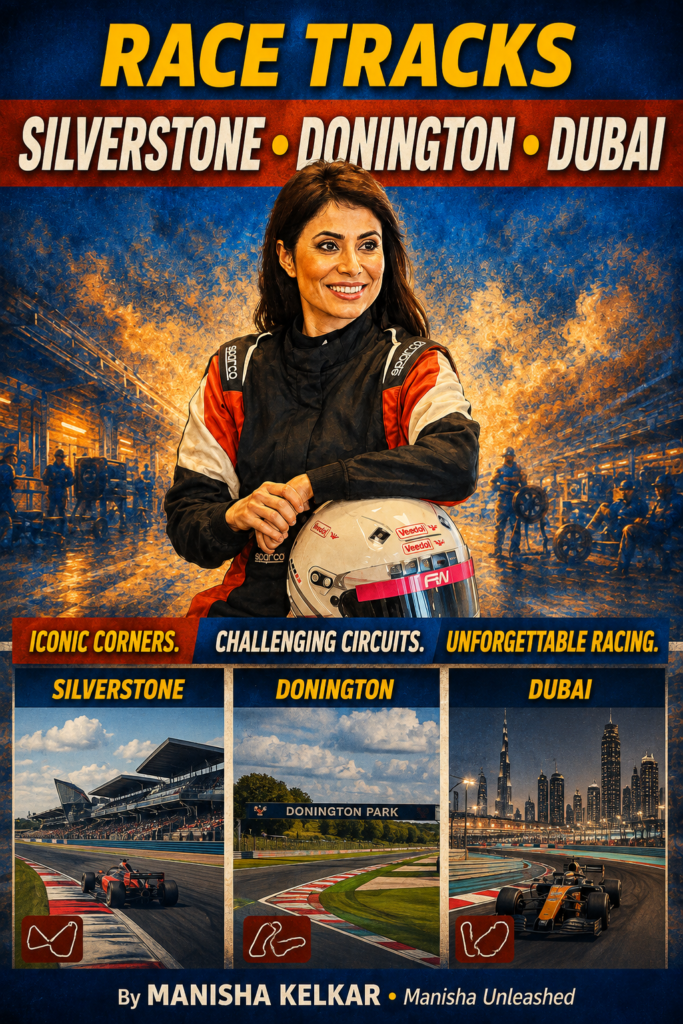
Manisha Unleashed: Some of the Race Tracks I’ve Driven
There is something special about arriving at a race circuit.
Before you even see the track, you begin to feel it.
The transporter trucks. The garages opening. Mechanics preparing cars. Engines firing into life. Drivers walking through the paddock pretending they’re completely relaxed.
And then there’s that unmistakable smell of racing fuel, hot brakes, tyres and coffee.
I’ve been fortunate enough to drive at circuits in different parts of the world, and one thing I’ve discovered is that every race track has its own personality.
A circuit isn’t simply a collection of corners joined together by straights.
Some intimidate you. Some encourage you to attack. Some take hours to understand. Others have a rhythm that makes you want to keep driving until somebody finally takes the keys away.
Three circuits that have given me very different experiences are Silverstone, Donington Park and Dubai Autodrome.
This isn’t intended to be a technical circuit guide. It’s about what these places feel like from my perspective as a driver—the atmosphere, the surroundings, the challenges and the people who make each circuit special.
So, helmet on.
Let’s go travelling.
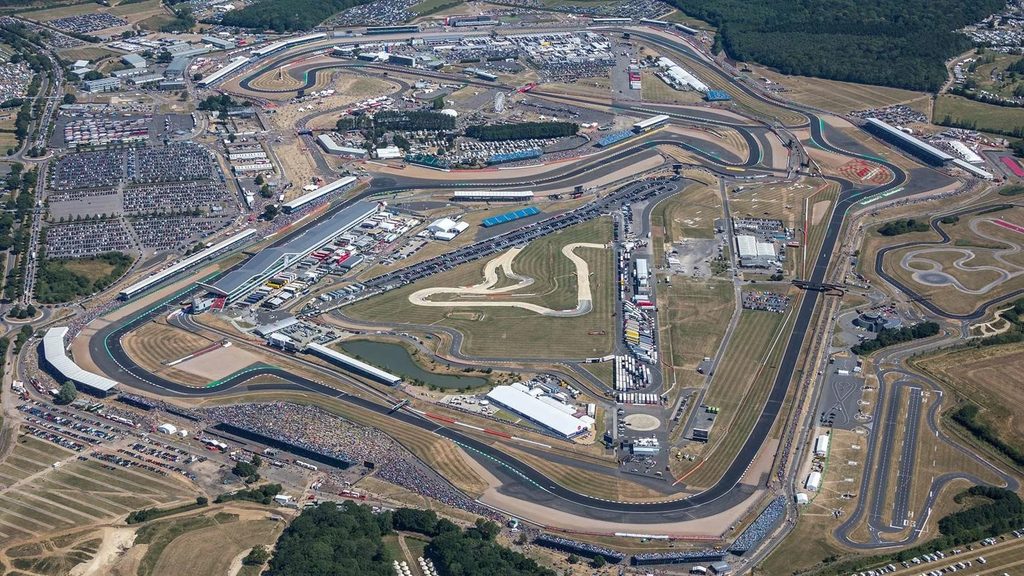
Silverstone – Where British Motorsport Lives
6
There are some circuit names that need almost no introduction.
Silverstone is one of them.
Even before you drive there, you know its history. Formula One, sports cars, motorcycles, club racing—generations of drivers have competed there.
When you arrive, that history creates an atmosphere that’s difficult to describe.
You know you’re driving somewhere important.
The Atmosphere
Silverstone feels big.
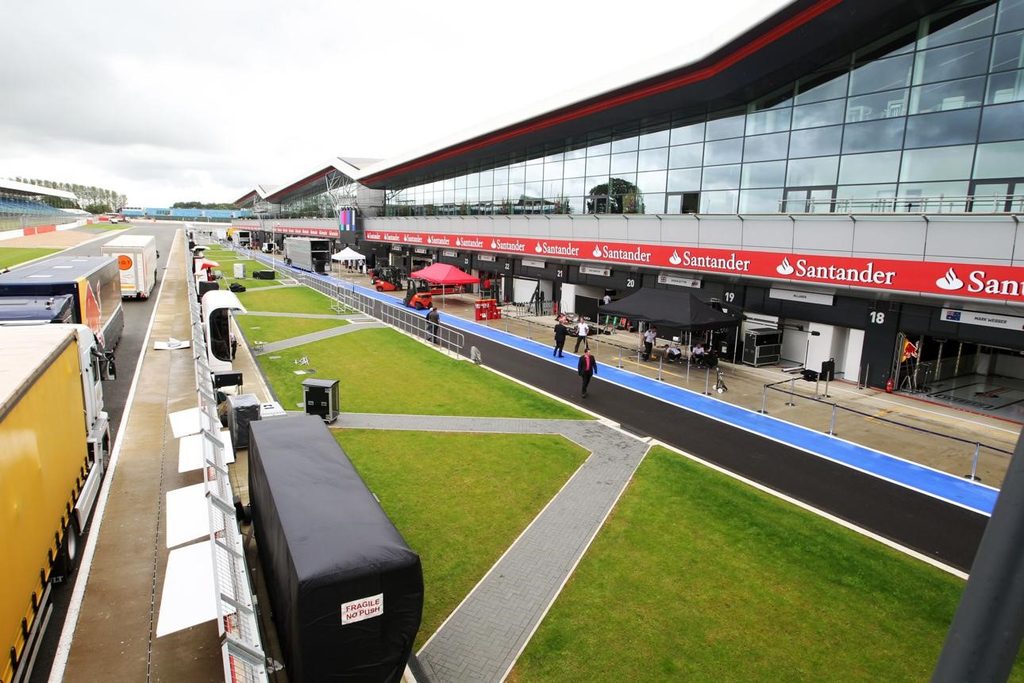
The circuit, paddock, garages and surrounding facilities immediately tell you that this is a venue designed for major international motorsport.
On a quiet test day, it can feel surprisingly serious and almost clinical.
Then fill the grandstands for a major race weekend and the personality changes completely.
Suddenly Silverstone becomes a festival.
British motorsport fans are knowledgeable, enthusiastic and wonderfully committed. Rain doesn’t necessarily send them home. It often seems to encourage them.
There is something fantastic about seeing spectators arriving prepared for almost every possible weather condition.
Sun cream?
Yes.
Waterproof jacket?
Yes.
Winter coat?
Probably.
Welcome to British motorsport.
The Driving Challenge
Silverstone is a circuit that rewards commitment.
It’s fast, and speed changes your perception of everything.
A corner that looks straightforward when you’re walking around the circuit becomes very different when you’re approaching it in a racing car.
The faster sections demand confidence because one corner often influences what happens next. You’re not always thinking about a single turn—you are thinking about the sequence.
Where do I position the car?
How much speed can I carry?
Am I compromising the next corner?
Can I get back to the throttle earlier?
That’s what makes circuits like Silverstone so satisfying.
When you get a sequence right, you feel it.
And when you don’t?
You spend the next lap thinking about it.
The Scenery
Silverstone isn’t surrounded by mountains or desert. Its landscape is unmistakably British: relatively flat, open countryside with enormous skies.
That actually contributes to its character.
You can often see weather approaching before it reaches you.
And in Britain, that can be particularly useful information.
You can have sunshine at one part of the circuit and rain somewhere else.
For a driver, changing conditions add another layer to the challenge.
The Fans
Silverstone’s fan culture is one of its greatest strengths.
British motorsport supporters understand racing.
They appreciate Formula One, but they also appreciate historic cars, sports cars, touring cars, motorcycles and club racing.
You can have a proper conversation with somebody standing beside the paddock fence and quickly discover they know exactly what they’re looking at.
For me, Silverstone represents something bigger than one circuit.
It represents British motorsport culture.
Donington Park – A Circuit With Character
5
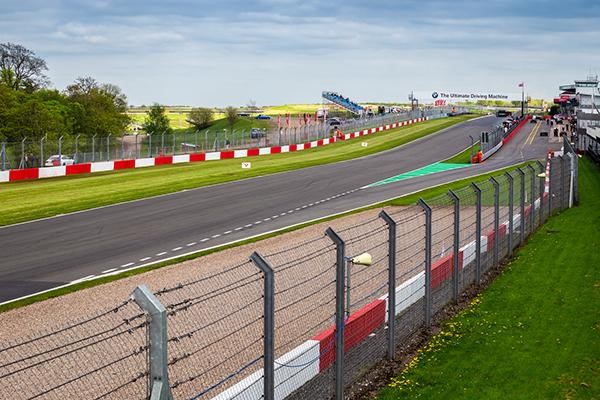
If Silverstone feels enormous and international, Donington Park feels more intimate.
And I mean that as a compliment.
There is a wonderful old-school feeling about Donington.
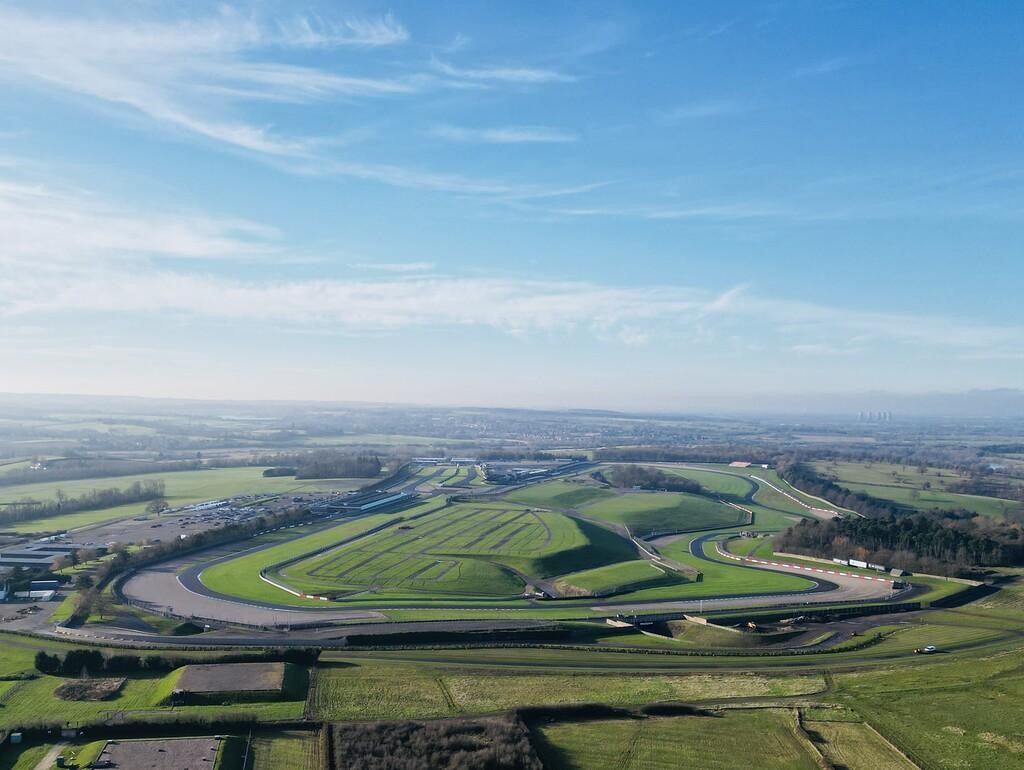
You’re much more aware of the landscape, the gradients and the fact that the circuit flows naturally through its surroundings.
The Atmosphere
Donington has character.
You feel closer to the action.
There’s a sense of traditional British motor racing about the place that I really enjoy. The paddock can feel busy without feeling enormous, and you’re constantly reminded that this is a circuit with a long history.
It’s the kind of place where I can imagine generations of drivers having exactly the same pre-race conversations.
“How much grip is out there?”
“What’s the weather doing?”
“Did you see what happened at that corner?”
Different cars. Different decades.
Same racers.
The Driving Challenge
Donington asks different questions from Silverstone.
One of the things that makes it so enjoyable is the change in elevation.
Driving uphill, downhill and through flowing sections means the car is constantly changing beneath you.
Braking downhill feels different from braking on level ground.
The load on the tyres changes.
Your view of the corner changes.
And then there are sections where rhythm becomes incredibly important.
Donington teaches you that racing circuits aren’t two-dimensional.
The gradient is part of the corner.
When you begin putting everything together, the circuit flows beautifully.
But if you get one section wrong, that flow disappears very quickly.
The Scenery
This is another reason I enjoy Donington.
It feels embedded in the English landscape.
Grass, trees, elevation changes and open views give the circuit a very different visual identity from a modern purpose-built facility.
There are moments when you almost forget you’re at a major racing venue.
Then somebody accelerates past at full throttle and reminds you.
The Fans
Donington attracts genuine enthusiasts.
There’s an accessibility to the place that I like. Fans can feel relatively close to the cars, drivers and paddock atmosphere.
That creates a different relationship between competitors and spectators.
For anyone who loves motorsport photography, historic racing or simply wandering around a paddock looking at interesting machinery, Donington can be a fantastic place to spend a day.
For a driver, however, there isn’t much time for wandering around.
We’re usually too busy wondering how we can find another two-tenths.
Dubai Autodrome – Racing in the Desert
6
Then we travel from the green countryside of Britain to somewhere completely different.
Dubai Autodrome.
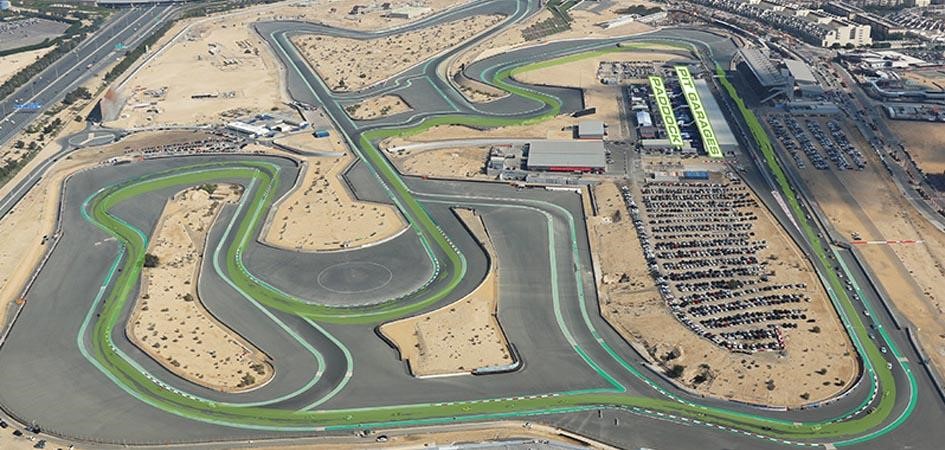
Driving in Dubai gives motorsport an entirely different atmosphere.
The architecture, climate, landscape and racing culture immediately remind you that you’ve travelled somewhere new.
And that’s one of the things I love about motorsport.
Racing gives you a reason to experience places you might otherwise never see in quite the same way.
The Atmosphere
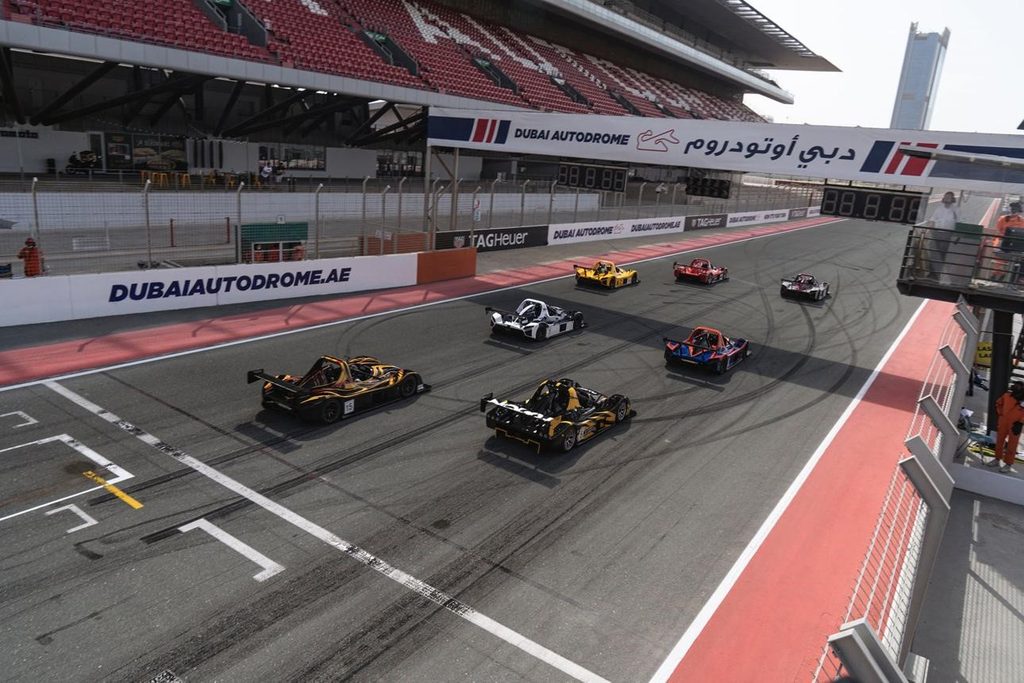
Dubai Autodrome feels modern and international.
You’re surrounded by drivers and teams from different countries, and English becomes the common language of the paddock.
But really, racers have another universal language.
Lap times.
You can put drivers from completely different cultures together and within five minutes they’re discussing braking points, tyres and who was fastest.
The Driving Challenge
The first obvious challenge in Dubai is the heat.
Temperature affects everything.
It affects the driver.
It affects the tyres.
It affects the car.
And it affects how you manage your energy throughout a session.
Driver fitness suddenly becomes very real when you’re wearing a race suit, helmet, gloves and other safety equipment inside a hot racing car.
You have to stay hydrated and maintain concentration.
Dubai Autodrome also demands technical precision.
There are different types of corners, changes of direction and braking zones where accuracy matters.
You can’t simply attack everything.
You need to understand where the lap time is coming from.
That’s one of the great pleasures of learning a circuit.
At first, you’re driving corners.
Then you start driving a lap.
There’s a difference.
The Scenery
Dubai provides a dramatic contrast to British circuits.
The colours are different.
The light is different.
The landscape is different.
Even the sky can make the circuit feel different.
And once you’ve finished racing, you’re in one of the world’s most extraordinary cities.
That’s where the travel side of motorsport becomes so interesting.
One day you’re analysing data in a garage.
The next you’re looking at the Dubai skyline.
The Fans
Motorsport culture in the Middle East continues to develop, and there’s a fascinating mixture of local enthusiasts and an enormous international community.
That creates a very different paddock atmosphere.
People bring their own motorsport traditions with them.
British fans.
European racers.
Indian enthusiasts.
Middle Eastern competitors.
Drivers from across Asia and beyond.
Everyone meets at the circuit because they share the same obsession.
Cars.
Three Circuits, Three Personalities
That’s perhaps what I’ve learned most from driving at different tracks.
There is no such thing as just another race circuit.
Silverstone gives me speed, history and the scale of British motorsport.
Donington gives me elevation, rhythm and that wonderful traditional racing atmosphere.
Dubai Autodrome gives me heat, international competition and the experience of racing in a completely different environment.
Each requires something different from the driver.
And each teaches you something.
Travel Is Part of Being a Racing Driver
People naturally think about the glamorous side of travelling for motorsport.
Hotels. Airports. New countries. Race tracks.
The reality can involve considerably more luggage, very early mornings and an unhealthy amount of time wondering whether your race equipment has arrived on the same flight as you.
But I love the fact that racing takes me places.
I don’t just want to arrive, drive and leave.
Whenever possible, I want to understand something about where I’m racing.
What makes the circuit famous?
What is the local motorsport culture?
What should I see nearby?
What do the fans love?
What food should I try?
What makes this place different from the last one?
Because motorsport is also a passport.
It introduces you to people and places you might never otherwise experience.
What Every Circuit Teaches You
As a driver, travelling to different circuits also prevents you from becoming comfortable.
A circuit you’ve driven many times begins to feel familiar.
A new circuit removes that advantage.
Now you have to learn.
Where is the grip?
Where can I brake?
Which kerbs can I use?
Where am I losing time?
What does the car need?
That’s exciting.
Every new track adds another little piece to your experience as a racing driver.
And when you’re trying to progress in motorsport, experience matters.
A lot.
Where Next?
Silverstone, Donington and Dubai have given me three very different racing experiences.
But there are many circuits still on my list.
Spa.
Monza.
Suzuka.
Daytona.
Sebring.
And, of course, there is one circuit that means more to my journey than any other.
Circuit de la Sarthe.
Le Mans.
One day, I don’t want to visit it simply as a motorsport fan.
I want to arrive carrying my helmet.
And when that happens, I’ll have another circuit—and hopefully a very special story—to add to this list.
— Manisha Kelkar
Manisha Unleashed | Motorsport Mania
India 🇮🇳 → Le Mans 🇫🇷