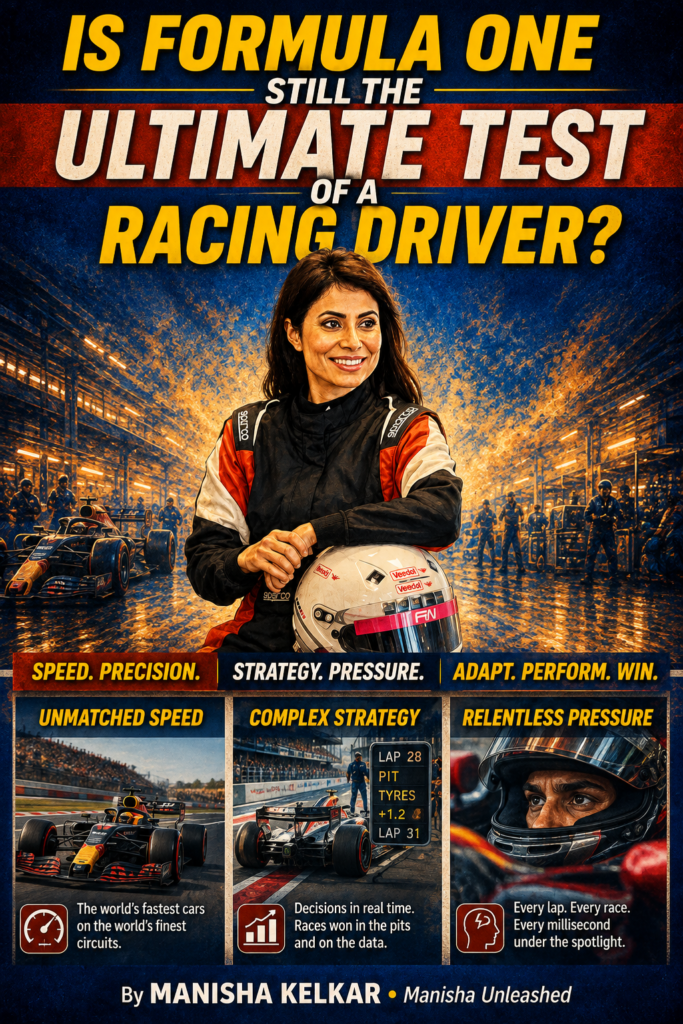
Is Formula One Still the Ultimate Test of a Racing Driver?
Or could endurance racing, IndyCar, rallying or another discipline demand an even broader skill set?
For decades, Formula One has been described as the pinnacle of motorsport.
The fastest cars. The biggest teams. The most advanced technology. The greatest budgets. And, supposedly, the best racing drivers in the world.
But there is a question I think motorsport fans should ask more often:
Is Formula One really the ultimate test of a racing driver — or is it simply the ultimate expression of one particular type of racing?
I have enormous respect for Formula One drivers. What they do inside an F1 car is extraordinary. But when you look across motorsport, there are disciplines that demand skills Formula One drivers rarely have to demonstrate.
So perhaps instead of asking which championship has the fastest cars, we should ask something different:
Which championship demands the most complete driver?
Formula One: The Ultimate in Precision
There is no denying the incredible challenge of driving a modern Formula One car.
The speed is enormous. The braking forces are brutal. Aerodynamic grip allows cornering speeds that seem almost impossible, while the driver must simultaneously manage tyres, energy deployment, brake balance, differential settings and instructions from the pit wall.
And everything happens incredibly quickly.
A tiny mistake can destroy a qualifying lap.
A few centimetres can separate perfection from a damaged front wing.
Perhaps the greatest challenge is that Formula One drivers are competing against other drivers who are exceptionally good.
Finding another tenth of a second when everyone is already operating near the limit requires extraordinary precision.
But Formula One also provides drivers with enormous resources.
Teams employ hundreds — sometimes more than a thousand — people. Drivers have engineers analysing almost every aspect of their performance. There are simulators, telemetry, strategy departments and enormous amounts of data.
That doesn’t make driving the car easy.
But it does make me wonder whether another form of racing might demand greater adaptability.
Endurance Racing: The Complete Racing Driver?
This is where endurance racing becomes fascinating to me.
And perhaps I am slightly biased because of my own ambition to race at Le Mans!
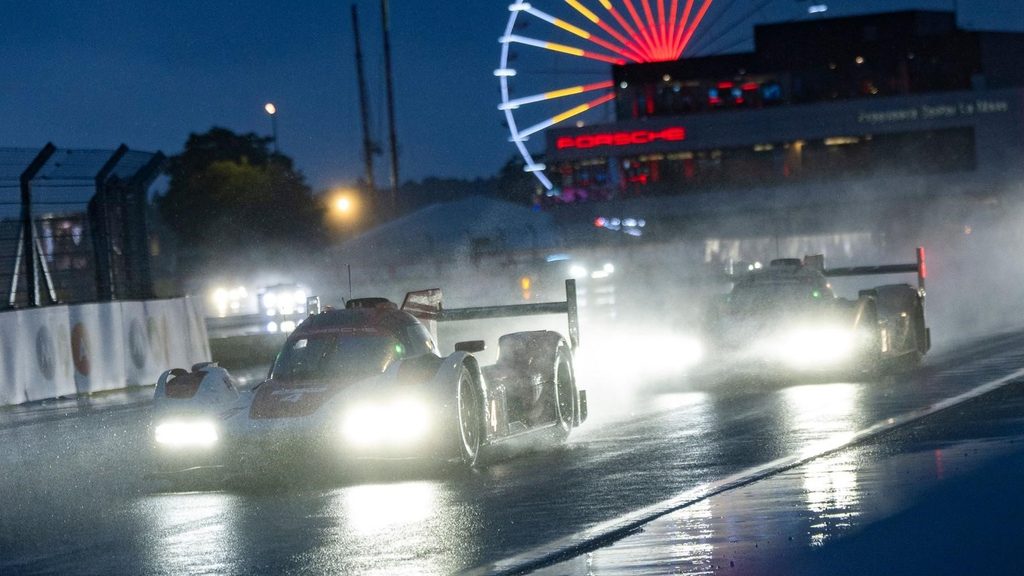
The Circuit de la Sarthe presents a completely different challenge.
7
Imagine racing at more than 300 km/h during the day.
Then doing it at night.
Then doing it in the rain.
Then encountering slower cars from another category while you are fighting for position.
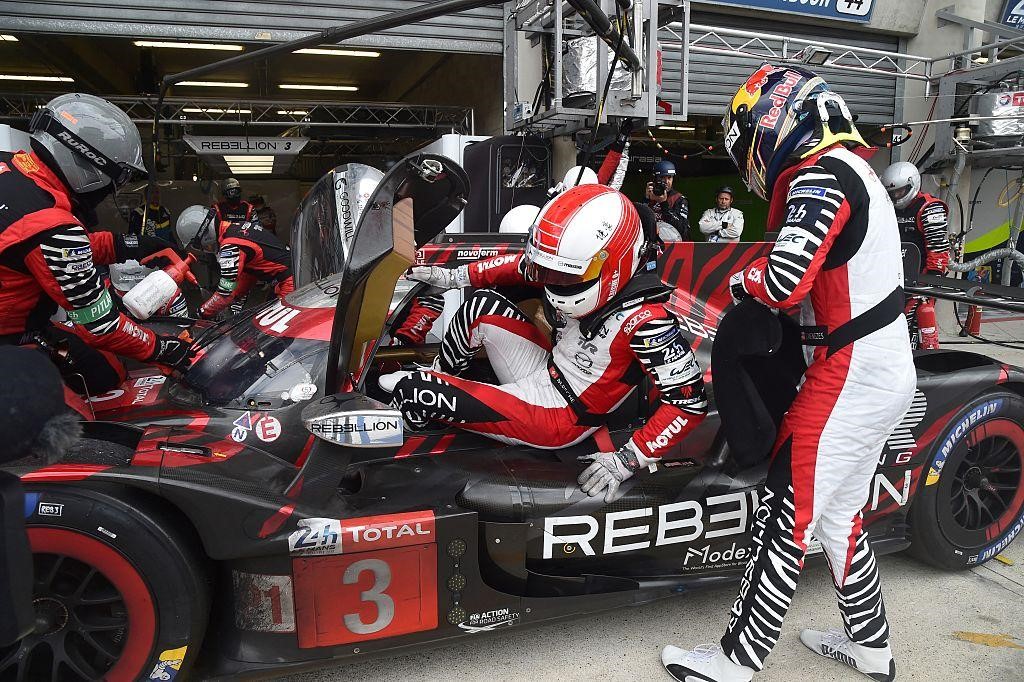
Then handing your car to another driver whose setup preferences may be completely different from yours.
And doing all of that while knowing the race lasts 24 hours.
Endurance racing requires something Formula One rarely demands: compromise.
The car cannot simply be designed around one driver’s preferences. Three drivers may have to share it.
You need speed, but you also need mechanical sympathy.
You need aggression, but you need patience.
You need to understand traffic.
You need to know when to attack and when losing half a second is better than taking an unnecessary risk.
And perhaps most importantly, you need consistency.
Setting one spectacular lap is impressive.
Setting competitive laps hour after hour, in changing conditions and through traffic, is something else entirely.
That is one reason winning Le Mans means so much to me.
It isn’t simply about being fast.
It is about being complete.
IndyCar: Speed Without the Safety Net
Then we come to IndyCar.
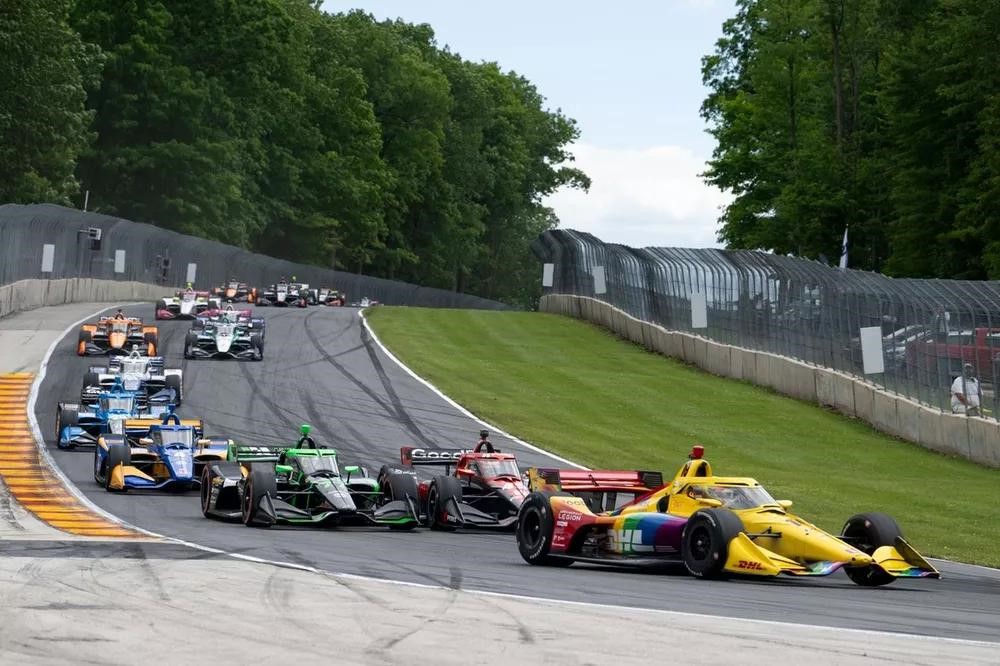
I think this championship deserves far more recognition internationally for the versatility it demands from its drivers.
An IndyCar driver might compete on a permanent road course one weekend, a street circuit the next and then face an oval at extraordinary speeds.
Those are almost different disciplines.
6
Driving through a corner at Indianapolis at well over 200 mph requires a completely different mentality from attacking the kerbs of a road circuit.
There is also less technological insulation between driver and machine.
The cars demand physical effort and confidence.
And because the machinery is relatively closely matched, drivers frequently have to race wheel-to-wheel.
That matters.
A great racing driver shouldn’t only be capable of producing a perfect qualifying lap.
They should be able to race.
IndyCar tests that ability constantly.
Rallying: Perhaps the Greatest Test of Car Control
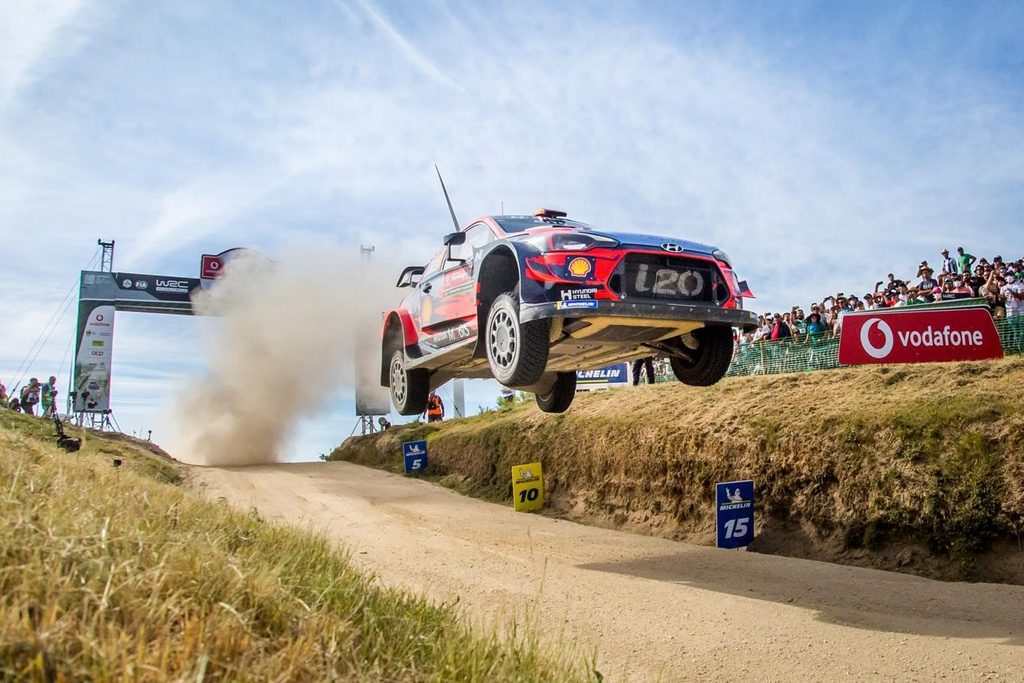
If the question is purely about car control and adaptability, rally drivers have a very strong argument.
Consider what they face.
Gravel.
Snow.
Ice.
Mud.
Tarmac.
Changing grip levels.
Blind crests.
Huge jumps.
Trees waiting for anyone who gets it wrong.
8
And instead of repeatedly driving the same circuit and gradually perfecting braking points, rally drivers attack stages largely from pace notes.
Their co-driver might effectively be telling them:
There’s a corner you can’t see coming.
Trust me.
Turn now.
That requires an extraordinary relationship between instinct, bravery and car control.
A rally driver must also accept that the surface can change dramatically from one corner to the next.
That kind of unpredictability simply doesn’t exist to the same degree in Formula One.
Put an F1 driver onto a loose gravel stage and I suspect they would suddenly discover an entirely different definition of “grip”.
What About NASCAR?
NASCAR is another category that can be underestimated by people who haven’t studied it closely.
“They’re just turning left.”
Yes.
At nearly 200 mph.
Surrounded by dozens of other cars.
Sometimes centimetres apart.
For hours.
The skill isn’t simply turning the car. It is understanding airflow, tyre behaviour, positioning, drafting and how other drivers are likely to react.
Racecraft becomes incredibly important.
The best NASCAR drivers seem able to sense how a race is developing long before the opportunity actually appears.
That is a different skill from qualifying a Formula One car.
But it is absolutely a racing skill.
The Skill Formula One Rarely Tests
There is another important point.
Modern Formula One drivers specialise very early.
Karting.
Formula 4.
Formula 3.
Formula 2.
Formula One.
It is an incredibly effective development ladder, but it creates drivers who have spent much of their careers mastering progressively faster versions of broadly similar machinery.
Historically, things were different.
Drivers competed in Formula One, sports cars, touring cars and sometimes completely different disciplines during the same season.
That produced drivers with extraordinary versatility.
Today, contractual commitments, testing restrictions and commercial considerations make that much less common.
Which leads to an interesting thought.
Maybe the ultimate racing driver shouldn’t be judged by performance in one championship.
Maybe they should be judged by their ability to succeed in many different cars.
My Ultimate Driver Test
If I wanted to discover the world’s most complete racing driver, I wouldn’t put everyone into Formula One cars.
I would create something much more interesting.
Every driver would have to compete in:
A Formula car — testing precision and aerodynamic driving.
An endurance prototype — testing traffic management, consistency and adaptability.
An IndyCar on an oval — testing commitment, racecraft and high-speed confidence.
A rally car — testing car control and changing surfaces.
A GT car — testing mechanical feel and managing heavier machinery.
And perhaps we should add a kart race just to make things interesting.
Same drivers.
Different disciplines.
Very little preparation.
Then we might discover something fascinating.
The fastest Formula One driver might not necessarily be the fastest racing driver overall.
So, Is Formula One Still the Ultimate Test?
For outright circuit performance and precision?
Probably.
For technology?
Almost certainly.
For pressure, competition and the relentless pursuit of tiny performance gains?
Absolutely.
But for the broadest possible examination of a racing driver’s abilities?
I’m not convinced.
Endurance racing demands patience, adaptability and consistency.
IndyCar combines road courses, street circuits and ovals.
Rallying demands extraordinary improvisation and car control.
Other disciplines test racecraft in completely different ways.
So perhaps Formula One isn’t the ultimate test of a racing driver.
Perhaps it is the ultimate test of a Formula One driver.
And there is a difference.
The driver I admire most isn’t necessarily the person who can master the fastest car.
It’s the person you could put into almost anything with four wheels, give them a few laps to understand it, and watch them find a way to make it fast.
Because to me, that is what being a racing driver is really about.
Unleashed Truth
Formula One may be the pinnacle of racing technology — but the world’s most complete racing driver might be competing somewhere else.
What do you think?
If you could choose only one discipline to identify the greatest all-round racing driver — Formula One, Le Mans/endurance racing, IndyCar or rallying — which would you choose?
— Manisha Kelkar
Manisha Unleashed
The Road to Le Mans